If you didn’t get the memo, I’ve migrated to Substack! Expect a monthly newsletter on cultivating a creative life for God’s glory. Here you’ll find musings on writing, old books, motherhood, the art of learning, cultural analysis, and spiritual formation. Nothing too precious, except life and everything in it.
When you hear the word “pivot” – what comes to mind?
If you grew up playing basketball (or went to countless games to cheer on your best friend, as I did), the word inspires an image of players moving from one place to another on the court, opposing teams in motion, bodies positioned and ready to accept the ball and send it through the air to the basket. The goal never changes; the aim is always to score. But how many times does a single player have to pivot their stance throughout a game to put themselves in the best possible position? (You know it, and I know it.) Many times. Every player on a team has to continually make small, calculated changes throughout the game to work together as a whole and, ultimately, aim to win. The players pivot their bodies in response to their circumstances, but the goal never changes.
Author and startup guru Eric Ries says, “A pivot is a change in strategy without a change in vision. You cannot have a pivot without vision (that’s just wandering around).” While “pivot” has become a part of that eye-roll-inducing corporate slang of the 2020s (along with the overused “circle back,” strangely ambiguous “ping,” and cringe “drill down”), I still find the idea helpful to maintain focus, and ward against a fear of failure. We can think about a pivot in a vocational or career sense, of course, but we can also use this to benefit our families, relationships, and personal goals. Let me explain by sharing some of my personal “failures” and how I’m learning to embrace the pivot.
Around a decade ago, I decided to fold a growing career as a media makeup artist to return to school to study theology…
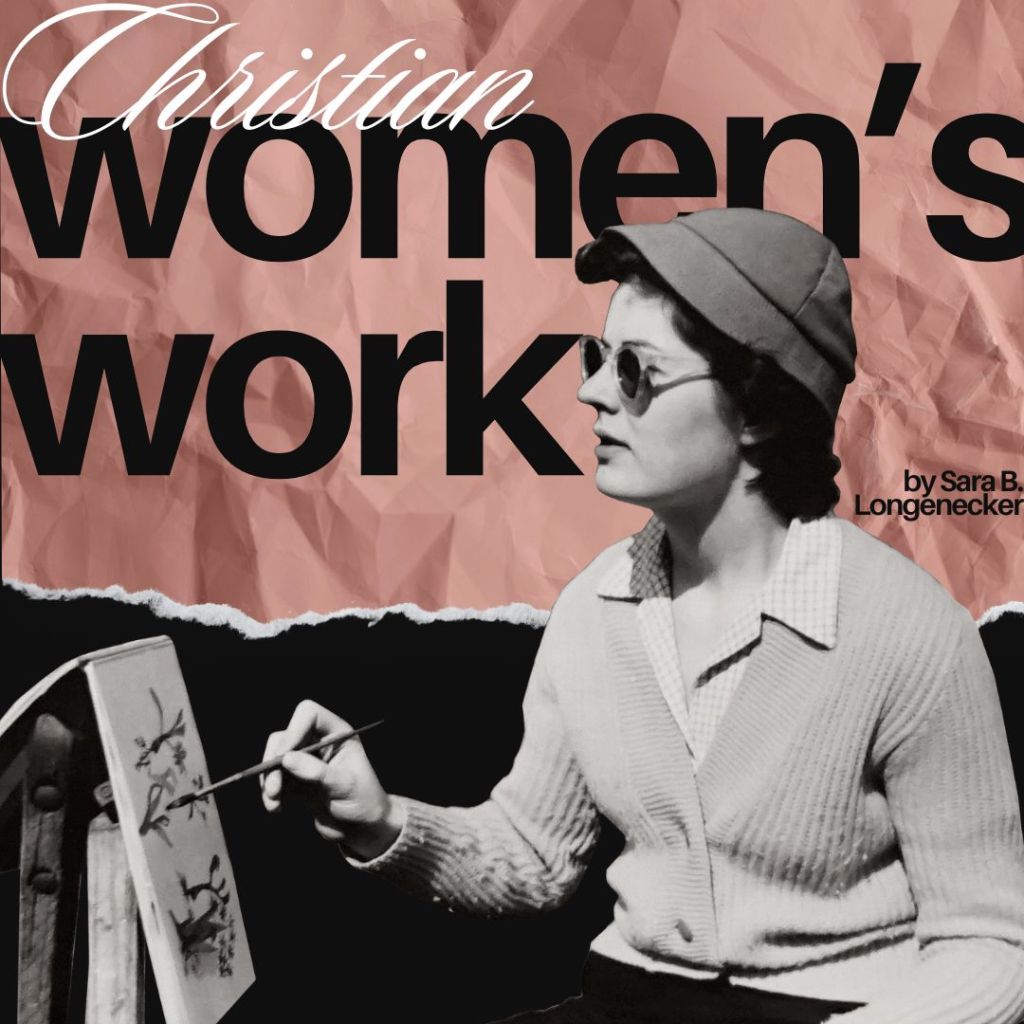
With all of the talk going around about Christian women’s work and vocational calling, it’s fitting that my recent article with Women & Work went live this week.
This practical 4-part framework has been extremely helpful in guiding my career, especially as a wife and mother.
Hope it encourages you, too! 🤍
When I got serious about following the Lord in my late twenties, I started to wonder how my vocational interests and ambitions could best serve the kingdom of God. I read books, listened to speakers, and followed leaders on social media, keeping my ear tuned to the theme of “calling.”
Over time, my curiosity crystallized into one strategic question: How do we, as Christian women, discover our vocational calling?
As has already been discussed here, our vocational callings are secondary to our primary calling to salvation and discipleship. Anything we do here on this temporary plane will be a kind of training for the eternal kingdom to come; our everyday work is a means to learn to listen to the voice of the Spirit of God and obey as He calls. But there may come a time after you’ve surrendered your life to Christ’s leadership that you start asking questions like,
‘What’s next?’
‘Where are we going, Lord?’
‘Where would you like me to serve?’
‘How can I best be used for your kingdom?’
or something similar.
It’s okay if this season of asking is a long one. Scripture gives us multiple examples of this season of waiting: the Apostle Paul spent three years after his conversion (Gal. 1:11-12, 18) waiting on the Lord to commission him to his ministry. David was anointed King as a boy but didn’t sit on the throne until he was thirty. Abraham walked righteously his whole life and didn’t see the fruit of the promise until he was ninety. These are a few examples of believers who spent years walking in faithful obedience to God, learning to understand His word and what pleases Him, before stepping into their vocational ministry or calling. Waiting is not a waste of time; it allows us to nurture love, gain maturity, and hone our skills.
Discovering your calling might feel like trying to solve a mystery, but it doesn’t have to–a path is already mapped out for us to follow. Let’s look at the multi-faceted approach to discerning our calling through four main pillars: Desire, Counsel, Decision, and Opportunity.*
Desire
Did you know God had a distinct purpose in mind when he made you? We are each created with a unique blend of talents, skills, and interests, and we should notice the particular desires of our hearts in pursuit of our calling. We can begin our journey with a bit of self-reflection and ask, “What am I interested in?” What are you curious about? What questions do you ask that others don’t? What stirs your creativity? The answers to these questions will give clues to where your desire lies.
Like a fenced green pasture for wandering sheep, we need the boundaries of scripture to help us traverse the freedom we have been granted and wisely discern our desires. The Apostle Paul emphasizes the freedom we have as Christians: “Whether you eat or drink, or whatever you do, do all to the glory of God” (1 Cor. 10:31). If our desires are not causing division among the believers or seeking our personal advantage, we can do anything to the glory of God.
Counsel
Next, we take in the wise counsel of others. At different points in my vocational life, I’ve received timely advice from a professor, my boss, a close friend, and my husband. They each spoke into my situation, and their words of wisdom helped propel me to the next phase of discovering my vocational calling. “The way of a fool is right in his own eyes, but a wise man listens to advice” (Proverbs 12:15). Wise counsel can come from a variety of sources, be it our parents, spouse, pastor, friend, or even an expert in the vocational field of our interest. Seeking wise counsel doesn’t mean we have to share our deepest desires with everyone we come across or overly consider the opinions of others; however, we will be better off in the long run to heed the encouragement or warning from those who love and know us best. Prayerfully trust the Holy Spirit to lead you to the right person (or people) for advice.
Decision
Eventually, there will come a point of decision or a cross in the road, and we will need to rely on sound judgment. Acts 15:22-29 relays an event when the early church chose two men to go with Paul and Barnabas on their missionary journey. The scripture emphasizes no less than three times, “for it has seemed good to the Holy Spirit and to us” that this particular decision was made. In our pursuit of calling, we may have clues as to what kind of work will best suit us; we may also have sound counsel from a trusted source. At this juncture, it will be important to lean into the discernment of the Holy Spirit to know if a direction does, in fact, “seem good to us,” and then we will have to decide. For me, it was applying to an online education program. The action was taken–and now, I must wait for the blessing of the Lord through acceptance to the program and for financial provision.
A note on decision-making: particularly as women, it is prudent to consider the season of life we find ourselves in and let this vital indicator guide our decision-making. Women bear the unique responsibility of taking our physical bodies into consideration in different ways than men when considering a career. There are realities to fertility, menopause, and a whole host of bodily considerations in between. When faced with uncertainty in your career due to a number of these issues, press into the Holy Spirit and seek wisdom.
Opportunity
Finally, we can do nothing without the providential hand of God–if He is calling us to this work, He will make the way. For some of us, this can be the most challenging pillar to accept because we can’t “make it happen” ourselves. As disciples, we must allow God to go before us and open the door of opportunity. Again, we see an example in Paul’s vocational life when the Lord prevented him from going into a particular area to take the gospel (Acts 16:6-7). Paul’s motives were right, and he may have even had sound counsel, but the Lord Himself prevented Paul’s decision to take the ministry to that area at that time. The world may tempt us with the promise of “manifesting” our destinies or push the seemingly innocuous hustle culture to try and create the circumstances of our success. Don’t be deceived along this line, friends–we are not in the executive seat of our lives. We must cultivate a submissive spirit to the Lord Jesus as He leads us and trust that His will and way are best.
I’ve found that as I trust the Lord to open the door and not try to do it in my strength, His opportunities are always better than anything I could have created. He knows what will be the best-suited, most life-giving work because He created us, and He loves us! Trust His leadership in your life. Earnestly seek to know Him, to walk in His ways, and to seek His purpose for your life. Take Paul’s words deep in your hearts and be encouraged, “…we know that for those who love God all things work together for good, for those who are called according to his purpose” (Rom. 8:28).
I pray that each of us will be discerning as we pursue our vocational callings and reap a harvest of life as a result.
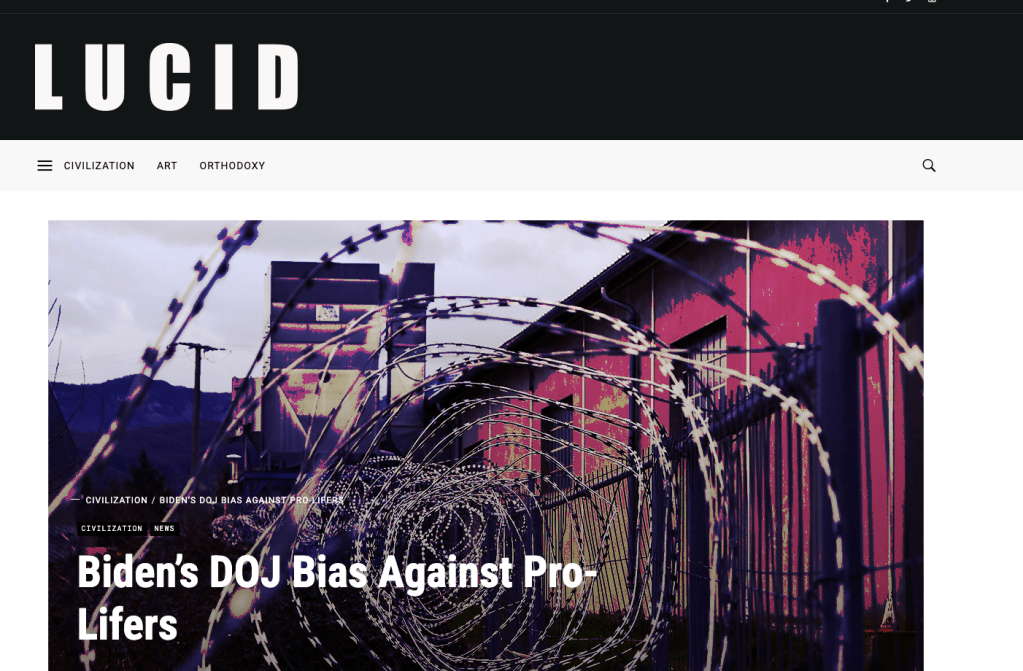
On Tuesday, in my home city of Nashville, six pro-life activists were convicted of both violating the Freedom of Access to Clinic Entrances (FACE) Act and felony conspiracy against the right to obtain “reproductive health services.” The group was found guilty of obstructing the employee and patient entrances of Carafem Health Center for almost three hours on March 5, 2021, which they did by peacefully praying and singing hymns. The verdict, which was rendered by a jury and decided in less than 4 hours, is another glaring example of the current administration’s efforts to intimidate pro-life Christians…
Read more over at Lucid Media (originally published 2/2/24)
Business is a metric-driven game, therefore, our emotional sense of success or failure can be directly informed by data. Did you see a return on your investment? Success! Did your new hire close his first deal in Q1? Success! Did the latest campaign generate more traffic? No, engagement is down by X% ( = Failure). These are clear-cut, facts over narrative, outcome-based scenarios to inform how one may emotionally classify an endeavor.
Success and failure in business isn’t as simple as I’m making it out to be, of course.
my personal assistant
It’s an emotional roller coaster, especially for those with the most on the line. What if you are a small business start-up? How long do you keep plugging away, investing all of your own capital and some of your family and friends, not seeing an ROI quite yet, until you throw in the towel? (Yes, I am pessimistic by nature, but also weirdly future-oriented, like an entrepreneur during the apocalypse.) I’m not saying it’s a cakewalk, but at least you have data points along the way to inform you of how things are going. You have road signs, fireworks, or flares, something to keep your expectations and emotions in check.
On learning to learn, the changing of seasons, and Elizabeth Gaskell’s ‘North and South’
In our (long)neck of the woods, the leaves are falling. This morning, while walking the dogs by the creek, the air was cool and wet, and I saw the first orb weaver spider of the season; they like to wait to bring out their giant displays of meticulously woven beauty until the frosty mornings of autumn. It’s a changing of the guard; out with the hazy days of August, thank goodness. I will sometimes walk with a stick to break up the webs of silk in my path, but I pause for a moment before doing so.
Thanks for the sign; Fall has begun.
And with fall comes, of course, the high intentions of sharpened pencils. The “back to school” season in our home is a new and strange one this year –not in a negative sense, but unfamiliar, even awkward at times. We are very much trying to find our feet in new territory, charting our path and all of that. There are small joys to be found: boys picking up instruments for the first time, meals made (and eaten) with time and care, and so many new books. I’m often asked the question, “How is it going?” by well-meaning friends and family, some with knowing love in their eyes, others with a skeptical expression as they ask. The “it” being homeschooling, the new thing we are doing, the thing that has affected other things, is affecting me.
For all the years I have been a Christian, and earnestly trying to follow Christ, the one thing I cannot (honestly) say is that it is boring. I guess it’s similar to raising kids in that way—as soon as you get used to the rhythms and practices of one season, everything completely changes and you are compelled to learn new ways to get along and even thrive. This is an excellent way to live, I suspect because it keeps you open to new experiences and learning all the time. It keeps you humble. Makes you remember earlier times with a bit of sentimentality and a load of gratitude. And just as soon as you get comfortable in a season and think, yeah, I’ve really got this thing figured out, the page turns and you find yourself in a whole new chapter.
This week, the boys and I started homeschooling. It’s a chapter that I didn’t seek out, necessarily, but one that has been lingering in my ‘maybe someday’ file. Maybe someday things will slow down enough to try it…maybe someday our schedules will be more flexible…
And then one day the proverbial straw broke me and I realized that I was the only thing holding us back (I’m the problem, it’s me). Friends, when I say it is a faith endeavor, I mean precisely that.
The internet, and social media especially, likes to talk a lot about mindset -about having “intentionality” with our thoughts. I only mock a little. I get the idea, yes we should be aware of our thought patterns and try to identify and correct any woe-is-me mindset. And scripture certainly instructs us to take every thought captive and submit them to Christ.
But as Christians, we must be the ultimate realists. And we know, like deep down on a cellular level, that we are broken at the baseline. All the affirmations and attempts at “manifestations” (ahem, witchcraft) in the world will not heal what is inherently broken. We will never overcome the sinful bent in our humanness with positive thinking. We need to look outside of ourselves for that.
This is why, on this hard and beautiful Monday morning, I wanted to share my favorite Psalm of Ascent (Psalms 121). This ancient collection of poems, or songs, was sung by the faithful as they traveled to the temple to worship God. They were sung in small groups as folks walked along dusty roads. They were whispered by individuals as they came to the stone steps that ascended upward, where they would meet God.
And they are for us, too. We can sing this simple call-and-response as we are taking our kids to school. We can sing as we start our day, coffee in hand, eyes lifted upward. We keep looking up because that is where the real help comes from. Not our mindful practices, not our goal-setting techniques, not our inner-selves. Our real hope comes from a real God, who is ruling from on high and still -amazingly, gloriously- cares for us.
I lift up my eyes to the mountains— where does my help come from? My help comes from the Lord, the Maker of heaven and earth. He will not let your foot slip— he who watches over you will not slumber; indeed, he who watches over Israel will neither slumber nor sleep. The Lord watches over you— the Lord is your shade at your right hand; the sun will not harm you by day, nor the moon by night. The Lord will keep you from all harm— he will watch over your life; the Lord will watch over your coming and going both now and forevermore.
As many of you know, I’ve embarked on a journey of fiction (not a fictional journey, I hope!) over the last few years.
I like to think that I’m reclaiming my childhood love of readingfor the pure fun of it…and because I need/crave the creative spark that nonfiction was not giving…and various other (mostly valid) reasons.
But I know myself too well (and some of you know me even better) to accept that a fa-la-la reason like fun was enough to take on the ~classics~ of fiction. No, there was something else driving this here train.
Get to the point, Sara: I’m reading fiction again, really good, rich, beautiful (and old) fiction. I’m also watching a lot of old/classic movies (and one timeless contemporary series). Hang with me and I’ll share my recommendations below.
But because I am who I am, I can’t just read and watch and enjoy, nooooo mam…I must go introspective and analyze why (always the question, why) Ikeep going back to the well of the old and the beautiful.
It probably has something to do with my age, and the desire to preserve the worthy art that has gone before me, and also how shallow and fast and ugly our twenty-first-century culture has become in contrast. There is also a deeply personal motivator here: I believe that we are shaped (for good or ill) by the culture/art we consume, and I want to be shaped by virtuous things to honor and reflect the beauty of God (and His good world).
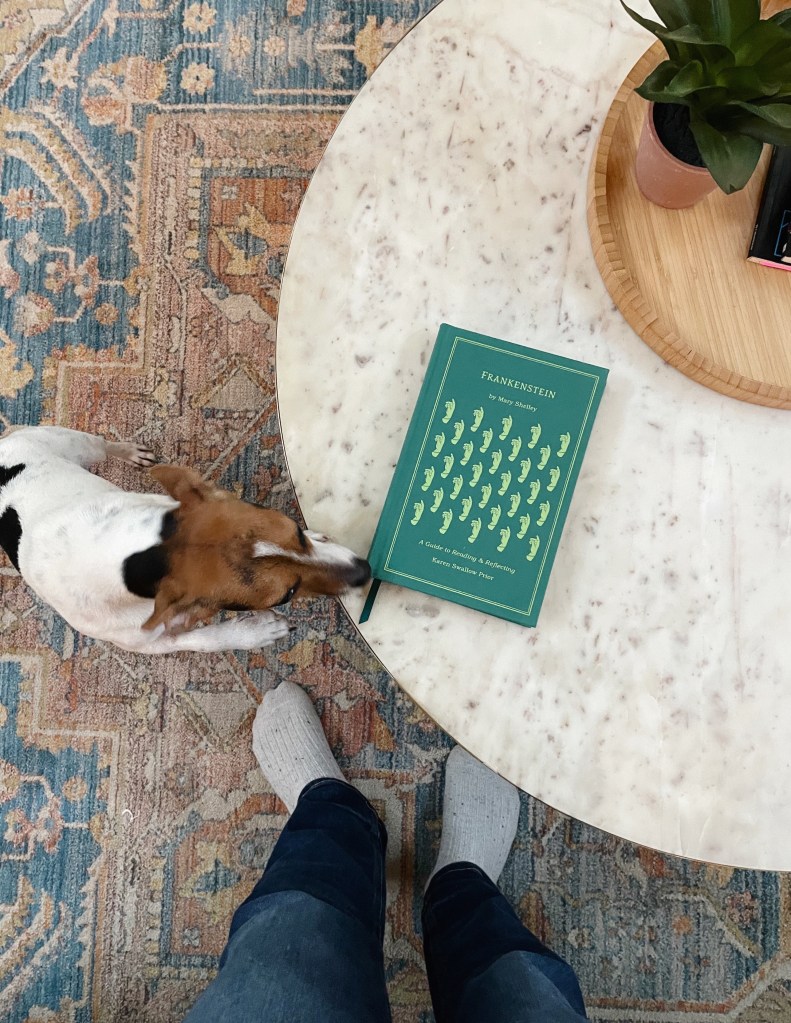
One helpful guide in this pursuit has been Karen Swallow Prior’s, On Reading Well: Finding the Good Life through Great Books. She advocates for reading quality literature because it allows us to have a kind of simulated experience of exercising our moral judgment, therefore shaping our character, which eventually predisposes us toward virtue. Or, as she succinctly puts it, “Reading literature, more than informing us, forms us” (Brazos Press, pg 22).
The experience itself then matters; how deeply we are engaged and moved by a story, how well it is written, the cadence and word choice and character development and description of setting, all contribute toward a lasting effect on our hearts and minds. Not just content, but form. Beauty matters.
When my son was about 3 years old, he had a game he liked to play, one he called “worker.” Without warning, he would switch into an imaginary mode and start addressing me as “worker,” cheerfully asking questions like, “Hello worker! What are you working on today?” There was usually some kind of costume involved (always with a hat, of course.)
The Christian Worker
When he first started playing this game, I hesitated for a moment, wondering if his dad and I were warping his impressionable ideas about work-life balance by (seemingly) working all the time. I worried that our work-from-home lifestyle (even before quarantine requirements kicked in) influenced him to think about mom and dad as one-dimensional “workers”…as people who only work.
But as we played the game off and on over a few weeks it became a fun little challenge for me to frame my role as “worker” in different lights for him to ponder. Some days I was the grocery-shopping and menu-planning “worker,” while other days I was the kind of “worker” who wrote words on a screen and held virtual meetings. In the simplicity of the game, it got me thinking about vocation and our call as Christian “workers.”
What is the Doctrine of Vocation?
One thing the Reformers got really right was their doctrine on vocation, based on Paul’s affirmation in 1 Cor. 7:17. But the idea is broader than just what we do for “work” (our careers or job); to pursue faithfulness in our vocations as believers means that, above all else, we trust the providence of God in our lives. In an essay on why and how the Reformers developed these revolutionary ideas, Dr. Veith explains the three main pillars of vocation–the household, the church, and the state.
He says,
“Vocation has to do with God’s providence, how He governs and cares for His creation by working through human beings. Vocation shows Christians how to live out their faith, not just in the workplace but in their families, churches, and cultures. Vocation is where faith bears fruit in acts of love, and so it grows out of the Gospel. And vocation is where Christians struggle with trials and temptations, becoming a means of sanctification.”
Heeding Paul’s guidance, when we are considering our vocation, we must begin in the home. The home, or “household,” is the place of our most intimate relationships as husbands, wives, mothers, fathers, children, roommates/close friends, and (sometimes) extended family, like grandparents. The home, therefore, holds the relationships in our lives with the most responsibility, but also the most potential for growth and good fruit. Similarly, we each have roles within the church, and, to a lesser degree, in the state (through our private employment or daily work, or in the service of the military or government).







 saralongenecker.com